
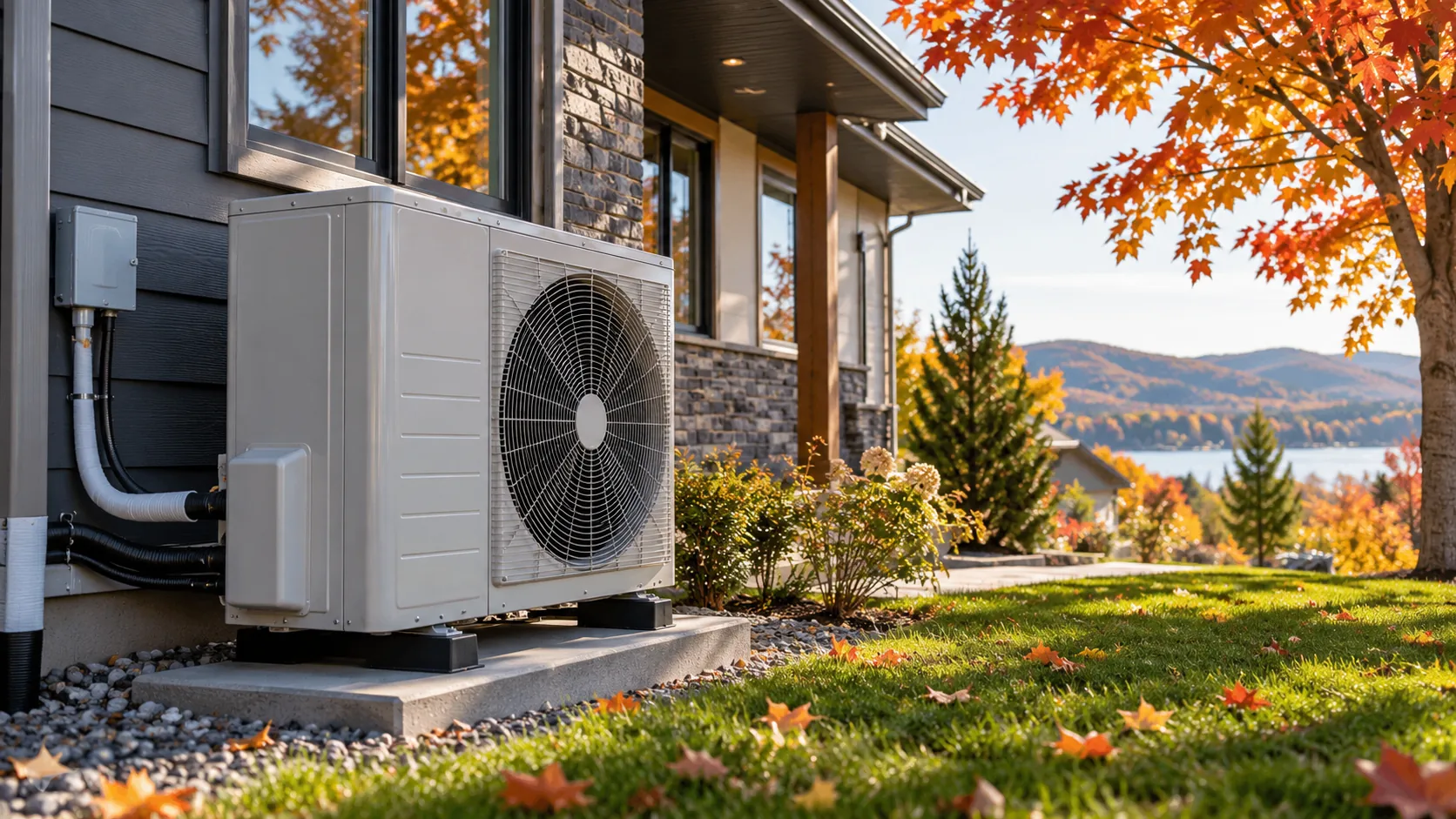
Updated October 27, 2026. A heat pump may qualify for a state, tribal, local or electric-utility rebate in the United States, but the former federal Energy Efficient Home Improvement Credit under IRS section 25C is not available for property placed in service after December 31, 2025. That date matters: search results and old buying guides still advertise federal credits without identifying the year they applied to.
The other big distinction is between tax credits and rebates. The former may reduce federal tax liability when eligible and available. The latter may be issued as a discount or payment under a specific program. Different agencies, budgets, household income rules and installation dates apply.
Federal geothermal credit and installation timing
The former federal Residential Clean Energy Credit under section 25D, which included eligible geothermal heat pumps, also ended for expenditures treated as made after December 31, 2025.
The IRS explains that, for this purpose, an expenditure on installed equipment generally is treated as made when the original installation is completed. Paying a deposit in 2025 does not preserve the 25D credit if installation was completed in 2026.
The separate section 25C credit for eligible home energy improvements is also unavailable for property placed in service after December 31, 2025. The distinctions between these two credits matter when reading older contractor advertisements.
See the IRS credit termination questions and answers.
Estimator warning: Rebate caps are not confirmed payments. State participation, income limits, approved equipment and available funding can result in a smaller benefit or no rebate at all. A calculator cannot approve eligibility.
What incentives can homeowners actually check in 2026?
| Incentive | 2026 reality | Where to verify |
|---|---|---|
| Federal section 25C heat-pump tax credit | Expired for property placed in service after December 31, 2025 | IRS |
| Home Electrification and Appliances Rebates (HEAR) | State/tribal implementation varies; up to $8,000 may be permitted for eligible space-heating/cooling heat pumps | Your state’s official administering agency |
| Utility heat-pump incentives | Availability, dollar amount and equipment conditions vary by utility | Your electric or gas utility |
| State and local efficiency programs | Eligibility varies; funding may be limited or closed | Official state energy office |
| Manufacturer promotions | Commercial discounts, not government eligibility | Written seller terms |
According to ENERGY STAR’s federal HEAR program summary, the heat-pump space-heating/cooling category can allow up to $8,000, but the federal framework does not mean everyone can claim an $8,000 rebate. Implementation and budgets differ by state. A state may impose narrower equipment, income or application conditions.
Is there still a federal heat pump tax credit in 2026?
For a newly installed heat pump placed in service in 2026, do not assume the old section 25C credit applies. The IRS explicitly states it is not allowed for property placed in service after December 31, 2025. Some articles describing a $2,000 federal heat-pump tax credit refer to earlier years. That headline is out of date for newly placed-in-service 2026 systems.
If you’re filing a return for an earlier tax year, the answer may differ because the installation date and prior-year rules matter. Check the IRS legislative update and FAQ and ask a qualified tax adviser when relevant. This page isn’t tax advice.
Who could qualify for a state HEAR rebate?
The HEAR framework primarily targets low-to-moderate-income households, generally below 150% of area median income. Program rules can use income tiers: up to the full eligible project cost for a household below 80% of area median income, and up to 50% of eligible costs in the 80–150% tier, within applicable caps. The states administering the program can narrow these rules.
A homeowner should not assume that a utility bill or ZIP code alone establishes eligibility. A state may require income verification, approved contractors, participating retailers, qualifying ENERGY STAR equipment, or pre-approval before purchase. State rules may also limit whether a heat pump replaces an existing fuel system or qualifies for a first-time installation.
Example: how a rebate cap is different from a guaranteed discount
Consider a hypothetical $12,000 project in a state running an eligible HEAR heat-pump rebate. Even though the federal framework shows an $8,000 maximum, the household’s actual approved incentive could be $0, $4,000, $8,000, or another amount depending on state rules, funding and income. An $8,000 approved payment would leave $4,000 before other charges; this calculation is not a prediction.
Find an eligible program in your state
- Start with the ENERGY STAR HEAR program description to understand the framework.
- Visit your state’s official energy office and search for home energy rebates, HEAR, or heat pump rebate.
- Check your electric utility’s efficiency-incentive page, separately from the state program.
- Confirm whether you must apply or obtain authorization before buying equipment or signing the installation agreement.
- Ask for written confirmation of eligibility, eligible equipment, contractor requirements, available funding and whether incentives can be combined.
What about heat pump water heaters?
They are a separate appliance category. Under the HEAR framework, an eligible heat pump water heater can have a maximum rebate of $1,750, rather than the space-heating heat-pump category’s $8,000 cap. Mixing these figures can make an otherwise useful article misleading.
Red flags in search results and contractor quotes
A claim that every American can get $8,000 now is missing important conditions. A claim of an automatic $2,000 federal tax credit for a 2026 installation is outdated. Beware requests for unnecessary private financial information on unofficial websites, promises of guaranteed federal approval, and quotes that subtract a rebate before the program has confirmed your eligibility.
Ask installers for the system model, installed price before incentives, relevant certification, the program name, and exactly who handles the rebate application. Keep copies of contracts, energy office instructions and equipment specifications.
Frequently asked questions
Are US heat pump rebates the same in every state?
No. Some programs have started, some are being implemented, and some offer different assistance or are restricted by funding. Check the official program serving your property.
Can I claim the old $2,000 federal heat pump tax credit for a new 2026 installation?
Not under the expired section 25C rules for equipment placed in service after December 31, 2025, according to the IRS. A different incentive may still apply.
Is the HEAR $8,000 amount available to everyone?
No. The figure is a maximum program cap, not a guaranteed household benefit. Income, eligibility, approved equipment, remaining funding and state participation all matter.
Are Canadian homeowners eligible for US rebates?
No. US incentives don’t apply simply because a Canadian buys an American-made heat pump. Read Wisnaro’s Canada heat pump rebate guide for the separate program announced in October 2026.
Sources, illustration and update policy
This guide uses IRS and ENERGY STAR primary sources checked for October 27, 2026. State availability changes, so it intentionally does not invent a nationwide state-by-state dollar table. The hero image is illustrative, not a documentation photo or endorsement. Update the article when the relevant state changes its program or when a new federal law alters incentives.