
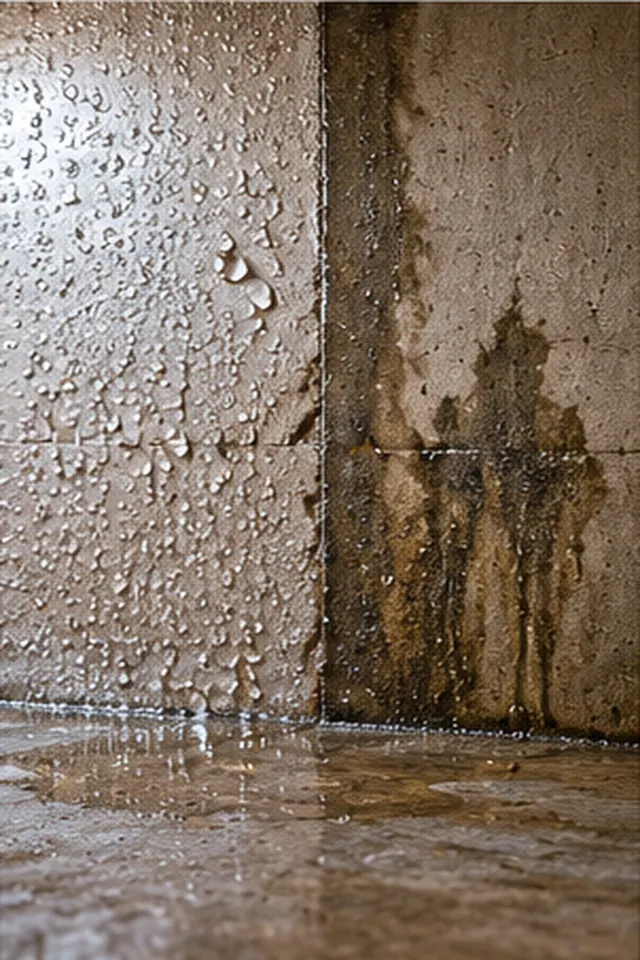
Finding water in a basement is frustrating because the cause is not always where the stain appears. Cool pipes can collect condensed moisture, masonry can become damp in muggy weather, and rainwater can enter through cracks. This guide describes clues that help you decide what to inspect next; it is not a substitute for a building assessment.
Clues suggesting condensation
Water droplets on cold pipes, windows or broad cool surfaces during humid weather may point to condensation. A damp feel that tracks summer outdoor dew point, without a clear rain-related pattern, strengthens that possibility. A hygrometer measures surrounding air moisture but cannot see water inside a wall.
Clues suggesting liquid water entry
Puddles at a wall-floor joint, localized stains after storms, water following a pipe, or recurring wet spots beneath plumbing fixtures suggest a source that needs physical repair. Investigate grading, gutters, window wells and foundation drainage; do not assume a portable appliance can solve these problems.
A basic observation log
Take dated photographs of the affected spot, note recent weather, record indoor humidity and temperature, and check whether pipes or foundation surfaces are cooler than air. The combination is more informative than one humidity number. Avoid opening walls or contacting electrical equipment in wet areas without appropriate professional precautions.
What to do with existing damage
Stop water intrusion, dry safe-to-access materials promptly and assess whether porous materials are contaminated. EPA’s mold guidance prioritizes moisture correction. Large or recurring problems, structural damage and suspected widespread contamination warrant professional help.
How to investigate moisture in different climates
The same diagnostic principles apply in the United States, Canada and elsewhere, but local climate and construction affect which causes are likely.
In a humid summer climate, warm air contacting cold basement surfaces can produce condensation. In areas with heavy rainfall, poor drainage or rising groundwater may be more important. In colder climates, seasonal temperature differences and insulation details can change where moisture accumulates.
Record indoor relative humidity, surface conditions and the timing of wet spots. For suspected exterior water intrusion, check local building and drainage requirements before making alterations. No single humidity target or dehumidifier setting can identify every moisture source.
Compare the evidence before choosing a repair
A damp basement wall does not tell you the source of the water by itself. Condensation, rainwater entry, a plumbing leak and moisture moving through building materials can produce similar-looking stains. The timing and location of the moisture provide useful clues, but none is a guaranteed diagnosis.
| Observation | Possible explanation | Useful next check |
|---|---|---|
| Droplets form on a cold pipe during humid weather | Condensation | Measure room humidity and inspect pipe insulation |
| A wall becomes wet after heavy rainfall | Exterior water intrusion | Inspect grading, gutters, downspouts and window wells |
| A wet patch appears beneath a water line | Plumbing leak | Inspect fittings and arrange appropriate repair |
| Moisture returns despite dehumidification | Ongoing source of moisture | Investigate hidden leaks and drainage before buying a larger appliance |
Worked example: a basement wall that becomes wet in July
Imagine a homeowner notices dampness on a concrete wall during a hot, humid week. A hygrometer reads 68% relative humidity, and a cold-water pipe nearby has visible droplets. That combination makes condensation plausible.
However, if the same wall becomes saturated immediately after storms, the homeowner should also investigate exterior drainage and water entry. A humidity reading cannot rule out a leak.
A reasonable first response is to document the location and timing, check for active water entry, reduce excess humidity and keep wet materials from remaining damp. Avoid concealing the affected wall with new finishes before identifying the moisture source.
When to stop troubleshooting yourself
Standing water near electrical equipment, sewage contamination, extensive damage, persistent mold or suspected structural problems call for appropriate professional assistance. Do not use a dehumidifier as a substitute for repairing water entry.
The US EPA emphasizes moisture-source correction and prompt drying. In general, wet materials should be addressed within 24–48 hours when safely possible. EPA moisture guidance.
A simple plastic-sheet moisture check
A taped plastic-sheet check can provide another clue when a concrete wall is damp. On a safe, accessible section of masonry, secure a small clear plastic sheet around its edges and inspect it after 24–48 hours. Moisture on the room-facing side can suggest condensation. Moisture trapped against the masonry can suggest moisture leaving the wall.
This is a screening observation, not a definitive leak test. Results depend on weather, surface conditions, air leakage and how the sheet is sealed. It cannot reliably identify the precise source of water, and it should not delay repairs where active water entry is visible.
A second useful check is surface temperature. Condensation becomes possible when a surface is at or below the surrounding air’s dew point. A hygrometer and a surface-temperature measurement can help investigate this, but an infrared thermometer reading depends on the surface and measurement technique.
White mineral deposits on masonry can indicate movement of water carrying dissolved salts, but they do not by themselves prove where that water originated.
Related Wisnaro guides
Frequently asked questions
Can a hygrometer identify a foundation leak?
No. It measures air humidity, not the source of hidden water.
Should I keep running a dehumidifier while a leak continues?
A dehumidifier may assist drying, but fixing the water source remains essential.