
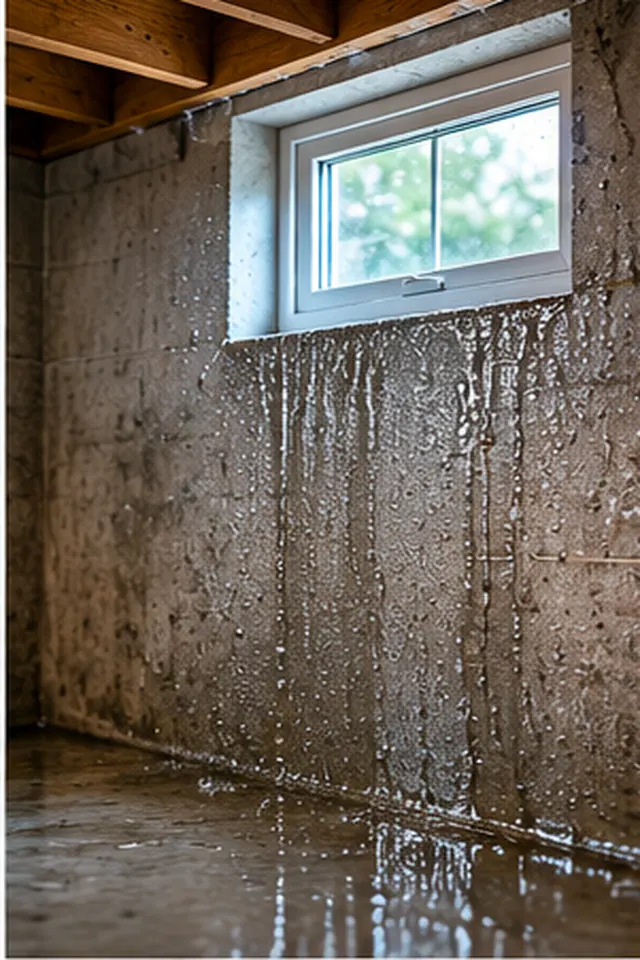
Basements can feel damp during a hot summer even when there is no obvious leak. Warm outdoor air may contain enough moisture to condense when it reaches cool foundation walls or floors. But a humid basement can also be a drainage or plumbing problem. The right first step is finding the source, not automatically opening every window.
Warm air meets cold surfaces
When humid summer air enters a cooler basement, its relative humidity increases as it cools. At sufficiently cold surfaces, moisture can condense. Natural Resources Canada and the Government of Québec describe this seasonal mechanism. A hygrometer helps document the pattern, and condensation on pipes or masonry can provide clues.
Why opening windows can make it worse
Outdoor air can feel breezy but carry more actual water vapor than basement air. If hot humid air enters and cools, it can increase the indoor moisture burden. Compare outdoor dew point or absolute moisture conditions instead of only indoor and outdoor relative-humidity percentages.
Look for water entry separately
Inspect downspouts, grading, foundation cracks, window wells, sump-pump function and plumbing. New damp patches after rain suggest a different problem from mild seasonal condensation. Water staining, puddles or persistent wet materials require repair, not only a humidity-setting change.
A practical response order
Measure indoor humidity over several days, log conditions and rainfall, identify wet surfaces, fix leaks, and operate a suitably sized dehumidifier if necessary. EPA recommends keeping indoor humidity below 60%, ideally around 30–50%. Long-term dampness or visible microbial growth may require professional evaluation.
Why summer humidity can rise even without a leak
Warm outdoor air can carry substantial water vapor. When it enters a cool basement, its relative humidity rises as it cools. Under suitable conditions, condensation forms on surfaces below the air’s dew point.
Consider a hot, muggy afternoon when outdoor air enters through an open basement window. Although the incoming air may initially feel fresh, cooling it indoors can make the basement air relatively humid.
That is why simply opening windows during humid weather may worsen basement moisture conditions.
| Pattern | Likely next check |
|---|---|
| Humidity rises on muggy days | Outdoor dew point and air leakage |
| Wetness follows rainfall | Gutters, grading and foundation drainage |
| Water beads on cold pipes | Pipe surface temperature and condensation |
| Only one wall remains wet | Local water entry or material moisture |
How to narrow down the cause
Record indoor humidity, room temperature and outdoor weather for several days. Note when doors or windows are opened and whether the dehumidifier is running.
Use those observations to identify patterns, not to make a definitive diagnosis. A recurring wet patch may have more than one source.
For identifying condensation versus liquid water intrusion, see our separate guide on basement condensation and leaks. Keep water-source repair separate from appliance sizing decisions.
Related Wisnaro guides
Frequently asked questions
Should I open my basement windows on every hot day?
No. Opening windows can introduce additional moisture when outdoor air is humid.
Will an air purifier solve a humid basement?
No. Filtration cannot replace moisture removal or water-entry repairs.