
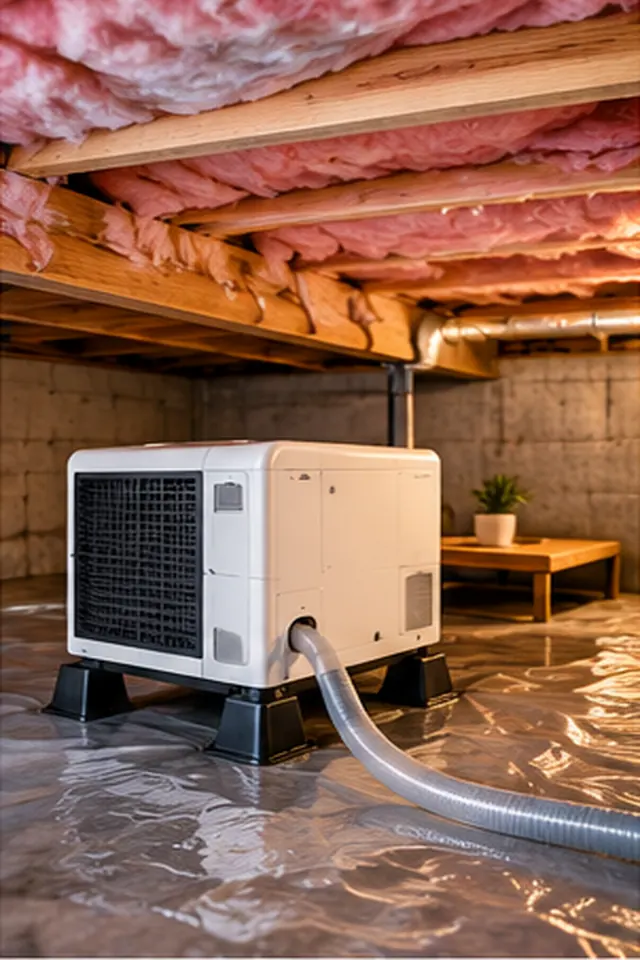
Crawl spaces are not ordinary finished rooms. Low temperatures, ground moisture, ventilation, water intrusion and access for maintenance can dominate dehumidifier performance. Area is useful for orientation, but area alone cannot determine a precise required capacity.
First determine what is making the space wet
Inspect for standing water, leaking pipes, blocked drainage and exposed ground. Fix these problems before relying on a machine. A dehumidifier removes water vapor; it cannot repair a foundation crack or substitute for drainage and encapsulation work.
Use ENERGY STAR capacity bands cautiously
ENERGY STAR publishes general portable-dehumidifier recommendations by dampness. For rooms under 2,000 square feet, the broad ranges are 20–30 US pints per day for moderately damp conditions, 25–40 for very damp, and 30–50 for wet conditions. For areas over 2,000 square feet, the guidance is 30+, 40+ and 50+, respectively. These are minimum starting points for general rooms, not crawl-space engineering ratings.
Crawl-space-specific selection issues
Check whether the equipment is specified for low-temperature operation and the actual access opening. Decide how condensate will drain continuously and how it will be serviced. A sealed, conditioned crawl space may need different equipment from a ventilated, wet space. Professional assessment is sensible for persistent moisture or structural deterioration.
A worked planning example
Suppose an enclosed crawl space measures 900 square feet and feels consistently damp with localized damp spots. A general-room comparison band is 25–40 pints/day. This does not guarantee success in a crawl space, and manufacturer ratings at the expected crawl-space temperature are the next decision point.
Why crawl spaces need their own assessment
Crawl spaces differ from finished basements. Ground moisture, unsealed vents, air leakage, surface temperatures and drainage can dominate the moisture load. Two crawl spaces with equal floor area may require very different equipment.
| Condition | What to investigate first |
|---|---|
| Exposed earth | Ground vapor control and applicable local requirements |
| Water after storms | Drainage, grading and water entry |
| Open vents | The intended ventilation and moisture-control strategy |
| Very low temperatures | Manufacturer operating range and defrost capability |
| Persistent condensation | Surface temperatures and moisture sources |
A 900-square-foot crawl space is not automatically equivalent to a 900-square-foot finished room for dehumidifier selection. ENERGY STAR room-area capacity guidance can give a rough starting point, but not an engineered crawl-space recommendation.
For example, a sealed, dry crawl space with occasional elevated humidity may need much less moisture removal than a similarly sized area experiencing active groundwater intrusion. Fixing water entry takes priority over purchasing a larger appliance.
If choosing a dedicated crawl-space unit, verify drainage, electrical safety, service access and the manufacturer’s operating-temperature requirements. Where structural, mold or groundwater problems are present, obtain appropriate professional advice.
Related Wisnaro guides
Frequently asked questions
Should I buy based only on a 2,000-square-foot marketing claim?
No. Compare test conditions, pints per day, low-temperature operation and moisture sources.
Will a dehumidifier remove standing water?
No. Remove liquid water and repair the cause first.