
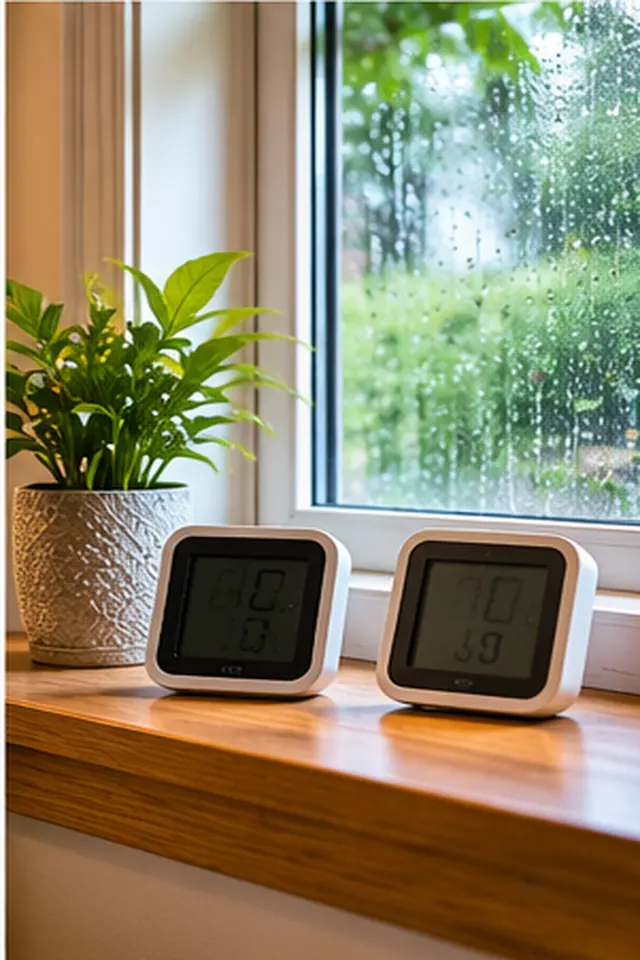
A new dehumidifier may collect water quickly without bringing the room to its target humidity immediately. The unit is removing water from the air, while walls, furniture, floors and outside infiltration can continue adding moisture. A single universal “hours to dry” claim would be misleading.
Distinguish air moisture from material moisture
A hygrometer reads the air at its location. It does not indicate how much water is stored in concrete, timber, drywall or furnishings. Even after the air reaches a lower humidity level, damp materials can keep releasing moisture for days or longer; ongoing leaks may prevent the target entirely.
Capacity is not a countdown timer
A 30-pint/day rating is measured under specified test conditions and does not mean the unit will collect exactly 30 pints every day in your basement. Temperature, room humidity, compressor cycles, dirty filters and the humidity set point change the actual collection rate.
What can be estimated honestly
If your bucket holds 1.5 US gallons (12 pints) and you observe 4 pints collected each day, it could take about three days to fill under the same conditions. That is a bucket-filling estimate, not a calculation of when a basement will be dry. The interactive tool below makes only this narrower estimate.
When progress stalls
Check the humidity reading over several days, compare machine settings, inspect filters and drainage, and look for fresh water intrusion. If the space stays above 60% RH or surfaces remain wet, prioritize identifying the source and consider professional assessment.
Three different timelines people often confuse
A dehumidifier can start collecting water soon after switching on, but that does not mean the basement has reached its target humidity or that damp building materials are dry.
| Question | What determines the answer |
|---|---|
| When will the bucket fill? | Bucket volume and actual daily water collection |
| When will relative humidity fall? | Moisture load, room temperature, capacity and outside air entering |
| When will walls or flooring dry? | Material type, depth of wetting, water source and drying conditions |
Worked example: estimating bucket-fill time
Suppose a dehumidifier collects 4 US pints of water per day and the bucket holds 12 US pints.
12 ÷ 4 = approximately three days until the bucket fills, assuming that collection rate stays constant and the unit runs continuously.
This is only a bucket-fill estimate. It does not mean the basement will take three days to dry. As relative humidity changes, collection rates can change substantially.
The interactive estimator on this page uses the same calculation. If you use continuous drainage instead of a bucket, the fill time becomes irrelevant.
A practical way to monitor progress
Record indoor relative humidity using a separate hygrometer at roughly the same location and time each day. Note outdoor conditions, whether doors and windows were open, and whether the dehumidifier operated without interruption.
A downward humidity trend is useful evidence that conditions are changing. But recurring wet patches or persistent musty odors should prompt investigation of moisture sources rather than reliance on the humidity number alone.
What if the basement recently flooded?
Do not use an ordinary dehumidifier calculation to estimate recovery from flooding, sewage contamination or significant water intrusion. Address safety, stop the source of water, and arrange appropriate drying or remediation.
The US EPA advises prompt action on wet materials following leaks or spills, generally within 24–48 hours where safely possible. EPA moisture guidance.
Why moisture removal usually slows down
A dehumidifier removes water at a rate that changes with conditions. As relative humidity decreases, and especially in cooler spaces, the amount collected in each operating hour can decline. That is why a capacity label should not be converted directly into a promise that a basement will dry in a fixed number of hours.
US dehumidifier capacity testing uses controlled conditions, including approximately 65°F and 60% relative humidity for portable units. Your actual room may be cooler, warmer, wetter or drier.
| What you are tracking | Useful measurement |
|---|---|
| Air humidity | Hygrometer reading taken consistently |
| Water collection | Pints or litres actually collected per day |
| Wet materials | Appropriate moisture measurements and inspection |
| Continued water entry | Location, timing and evidence of leaks |
Example monitoring log, not real field data
A hypothetical homeowner records 68%, 62%, 57%, 53% and 49% relative humidity over five successive days. That would illustrate a downward trend, but it is not measured Wisnaro research and cannot be used to predict another basement’s drying time.
A material moisture meter may help monitor some materials, but interpretation depends on the meter, material and measurement method. Moisture readings do not replace a flood-damage assessment when significant wetting has occurred.
Source: ENERGY STAR dehumidifier testing.
Related Wisnaro guides
Frequently asked questions
How fast should humidity fall after I turn it on?
There is no universal rate; it depends on the room’s moisture load and machine operation.
Can a small machine dry a flooded basement?
It is not a substitute for removing standing water and professional drying where needed.